
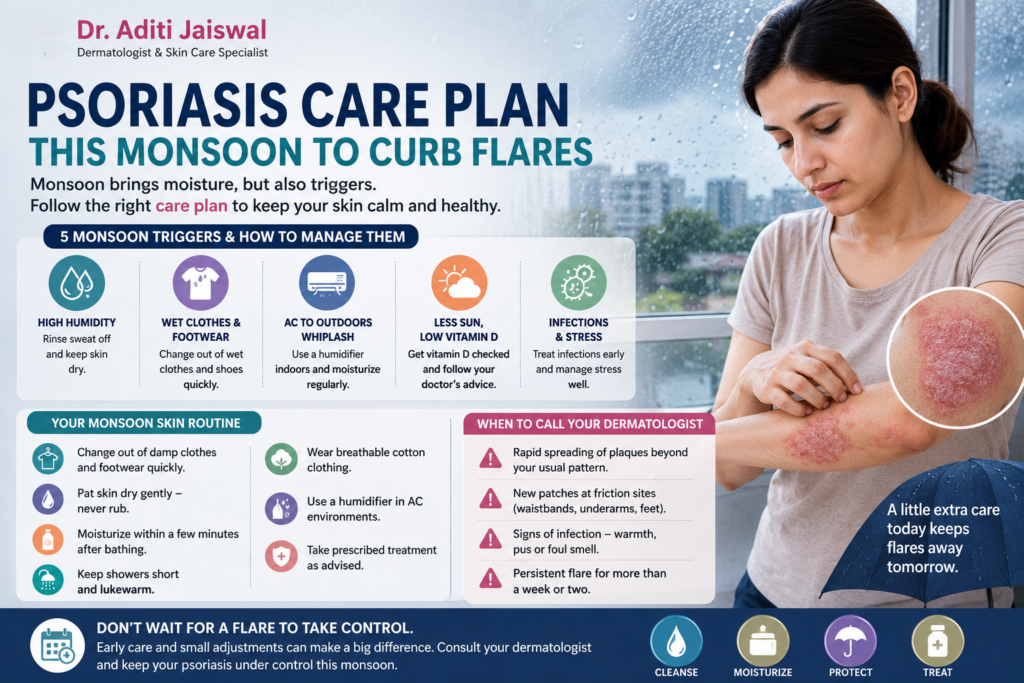
Psoriasis Care Plan This Monsoon to Curb Flares
Psoriasis Care Plan: Managing Flare-Ups During Monsoons Psoriasis care plan: Psoriasis doesn’t mind one kind of weather — it minds change. And Hyderabad’s monsoon delivers more of that than almost any other season. Between June and September, skin barely adjusts to one condition before the next arrives: muggy air outside, dry air-conditioned rooms inside, soaked clothes one hour, thick humidity the next. For someone managing psoriasis, that constant back-and-forth is exactly the kind of stress that invites a flare. The following psoriasis care plan can help: Five Monsoon Triggers, and How to Work Around Each Humidity sits on the skin. Moderate humidity keeps skin supple, but sustained dampness lets sweat linger, and evaporating sweat leaves behind salts that irritate plaques. Rinse and dry sweaty areas promptly rather than letting moisture sit. Wet clothes and footwear. Damp fabric rubbing against skin for hours is a classic trigger for new plaques at friction sites — a pattern known as the Koebner response. Change out of wet clothes and shoes as soon as you’re indoors, rather than waiting for them to dry on you. AC-to-outdoors whiplash. Bouncing between muggy outdoor air and dry air conditioning repeatedly stresses the skin barrier. If you spend long stretches in AC, a small humidifier and a midday moisturizer top-up help smooth the transition. Grey skies, less vitamin D. Overcast monsoon skies mean less natural sunlight and lower vitamin D synthesis — one reason many people see plaques ease in sunny months and return once the sun disappears. It’s worth asking your dermatologist whether a vitamin D check or a phototherapy schedule adjustment makes sense this season. Monsoon infections and stress. This season brings more seasonal infections, and immune activation from any illness is a recognized flare trigger. Prompt rest and treatment of infections indirectly protects your skin too. Psoriasis care plan: Your Monsoon Skin Routine Building a few consistent habits matters more than any single product: Watch for Infection, Not Just Flaking Humid, damp skin folds are an easy place for fungus and bacteria to take hold. Increased warmth, odor, or pus around a patch is a signal to see a dermatologist, not to self-treat — a superimposed infection needs different management than a plain psoriasis flare. When to Call Your Dermatologist Don’t Wait for a Full Flare to Check In Monsoon-specific adjustments — lighter moisturizers, short-term antifungal support, or a small treatment tweak — are far easier to make before a flare peak than after. If your psoriasis has been unpredictable in past monsoons, this is the right time to book a check-in with your dermatologist, not after symptoms escalate. Bring a quick log of what you’ve noticed this season — new patches, itch levels, anything that flares after rain or AC exposure — so your dermatologist can adjust your plan with real information instead of guesswork.
Psoriasis Care Plan This Monsoon to Curb Flares Read More »