
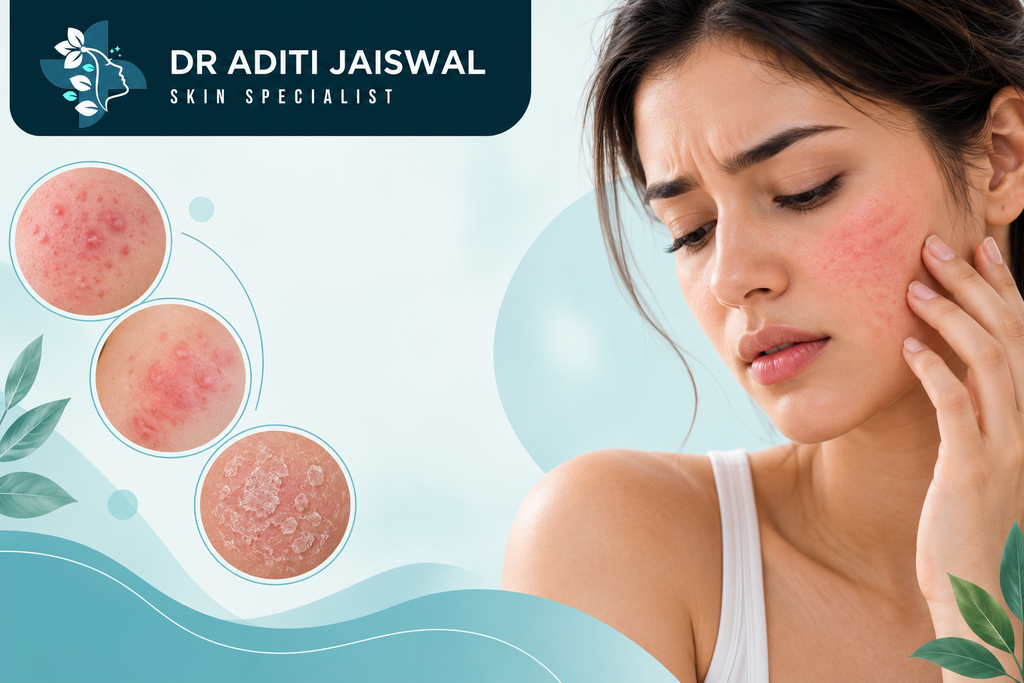
Sensitive Skin & Rashes: What Actually Helps
Sensitive skin and rashes: There’s a particular kind of frustration that comes with sensitive skin — you finally find a routine that seems to calm things down, and then a new “gentle” cleanser or a scented lotion undoes weeks of progress overnight. If that sounds familiar, you’re not imagining it, and you’re definitely not alone. Dermatologists increasingly describe sensitive skin not as one specific diagnosis, but as an umbrella term—a skin barrier that reacts more easily than most to things that wouldn’t bother anyone else.
So what’s actually going on, and more importantly, what helps if you have sensitive skin and rashes?
It Usually Comes Down to the Barrier
Your skin’s outermost layer works like a wall — it keeps moisture in and irritants out. When that wall is compromised, whether from genetics, over-washing, harsh products, or just dry weather, things that would normally bounce off your skin start getting in instead. That’s when you get stinging, redness, tightness, or a rash that seems to appear out of nowhere.
Mayo Clinic dermatologists point to a fairly predictable list of culprits: fragrance and essential oils, harsh surfactants (the foaming agents in a lot of soaps and shampoos), over-exfoliation, certain preservatives and dyes, and environmental stressors like cold wind, heat, or pollution. None of that is exotic. It’s mostly things sitting in your bathroom cabinet right now.
Worth asking yourself: did your skin start acting up right after you introduced something new — a cleanser, a laundry detergent, a fresh tube of sunscreen? That timing is often the biggest clue you have, more useful than any ingredient list.
Sensitive Skin and Rashes
Rash Versus Just “Sensitive”: They’re Related, But Not the Same
A rash — redness, bumps, dryness, sometimes oozing or flaking — is usually your skin’s active response to something. Contact dermatitis is the most common type, and it splits into two flavors. Irritant contact dermatitis happens when something simply damages your skin’s outer layer directly — think bleach, solvents, or even plain soap and water used too often. Allergic contact dermatitis is different: your immune system has decided a specific substance (nickel in jewelry, a fragrance compound, poison ivy) is a threat, and it reacts accordingly. Interestingly, a lot of people have both going on at once, which is part of why “just switch soaps” doesn’t always fix things on its own.
If you’ve had a rash flare up and quietly wondered whether it’s “just sensitive skin” or something more specific like eczema, here’s a reasonable way to think about it: a single new rash tied to a recent exposure looks more like contact dermatitis. A rash that’s been showing up on and off for years, especially somewhere like behind the knees or inside the elbows, and that runs in the family alongside allergies or asthma, is leaning more toward atopic dermatitis (eczema).
What Actually Helps
This is the part most people get half right. A Mayo Clinic dermatologist recently laid out the basic approach pretty plainly: cleanse gently, calm inflammation, and rebuild the barrier — in that order.
In practice, that looks like:
- A gentle, fragrance-free cleanser, used once or twice a day at most. Skip the loofah and the vigorous scrubbing — that’s actively working against you.
- Lukewarm water instead of hot, and shorter showers. Ten minutes is a reasonable ceiling.
- Moisturizer applied while your skin is still damp, not after it’s dried out. Products with ceramides, glycerin, or plain petroleum jelly tend to do the heavy lifting here.
- Patting skin dry with a soft towel rather than rubbing.
- A short ingredient list. Every additional ingredient is one more chance for a reaction, especially for reactive skin.
Home remedies that come up a lot — and genuinely have some backing — include oatmeal baths and a thin layer of petroleum jelly, which is fragrance-free, cheap, and surprisingly effective at sealing in moisture.
When to Stop DIY-ing It
Give a simplified routine like the one above one to two weeks. If you’re not seeing real improvement in that window, that’s generally the point where dermatologists suggest getting an actual diagnosis rather than continuing to guess. Persistent oozing, spreading redness, fever, or a rash that’s rapidly getting worse rather than better are signs to get seen sooner rather than later — those can point toward an infection rather than simple irritation.
The Real Takeaway
Sensitive skin and rashes are not a personality trait or something you just have to live with — it’s usually a barrier that needs less interference, not more products. Before reaching for the next “soothing” serum, it’s worth asking whether your routine has actually gotten simpler over the past year, or just more crowded. Consult your dermatologist today if you have a recurrent problem.